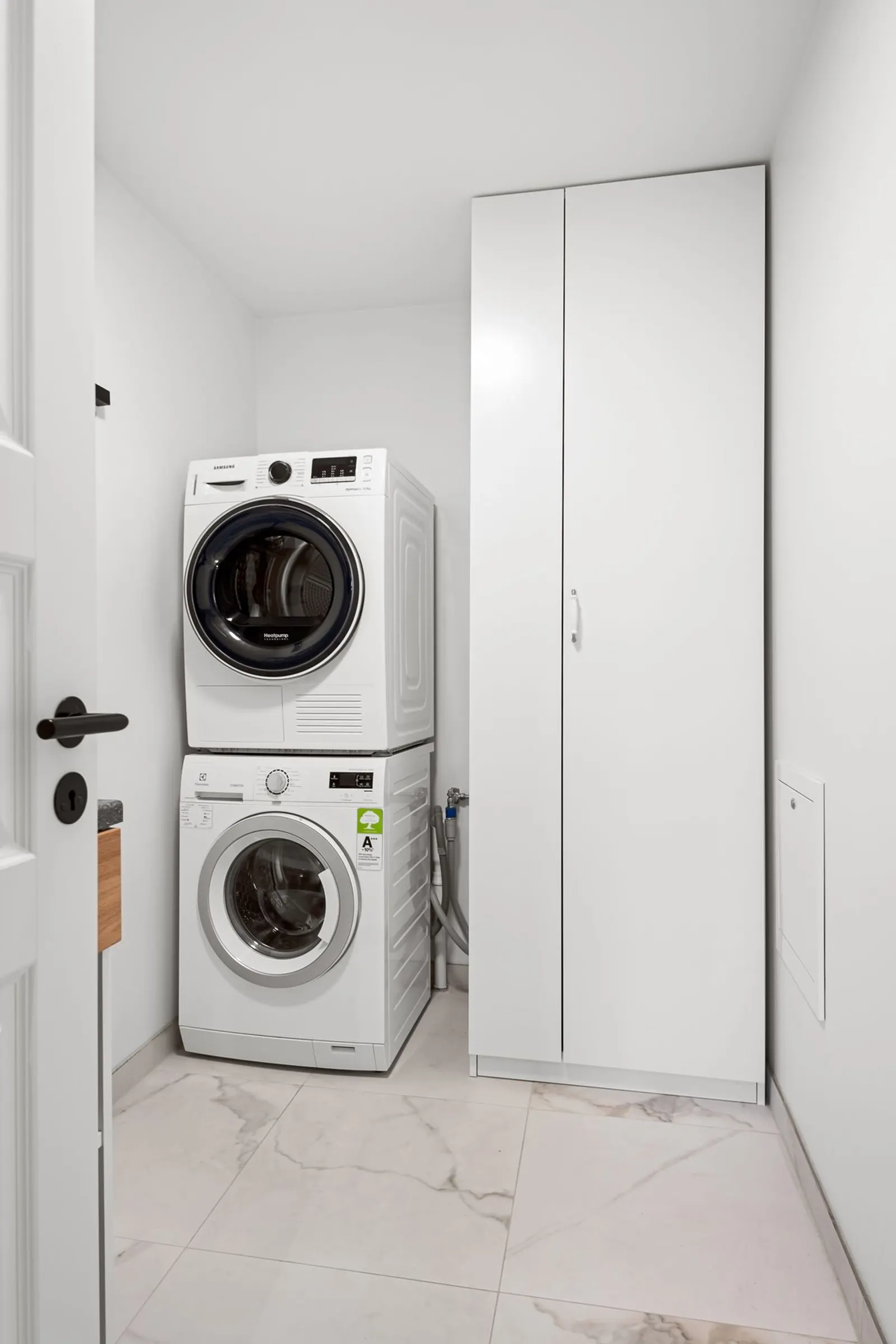
A slow fill, no fill at all, or a drum that's still holding water once the cycle's supposedly done usually traces to one of two parts: the water inlet valve or the drain pump. Kenton's century-old streetcar-suburb bungalows have had a long time for hose bibs and drain lines to wear down or get patched over the decades, and in a garage laundry setup especially, we treat that plumbing as just as likely a suspect as the washer's own components.
The inlet valve and the drain pump between them account for nearly every won't-fill or won't-drain call we get. The valve typically fails from mineral scale building up inside it or a diaphragm that's split, while the pump usually goes when its impeller wears out or picks up something it shouldn't — a coin, a small sock. Kenton's bungalows date back to the early streetcar-suburb era, and it's common to find a hose bib or drain fitting that's been patched, replaced, or rerouted at some point in the last hundred-plus years; we trace the actual plumbing path rather than assuming it matches what a newer home would have.
Diagnosing fill and drain issues separately.
Testing the valve for mineral buildup or a torn internal diaphragm.
Checking for a worn impeller or an object lodged in the pump.
Checking supply hose bibs, relevant in Kenton's decades-old plumbing.
Confirming the standpipe height and diameter match the washer's drain rate.
A slow drip from the inlet valve or a loose drain connection doesn't stay contained for long, and in a Kenton garage laundry setup that water often ends up pooling near a wood-framed wall or against stored boxes rather than draining away like it would on a tiled utility-room floor. Catching a leak early, before it's had time to soak into something it shouldn't, keeps the fix simple.
Straight answers — no clicking around.
Call Portland Washer Repair to schedule a same-day or next-day valve/pump diagnostic visit.
(888) 555-0123