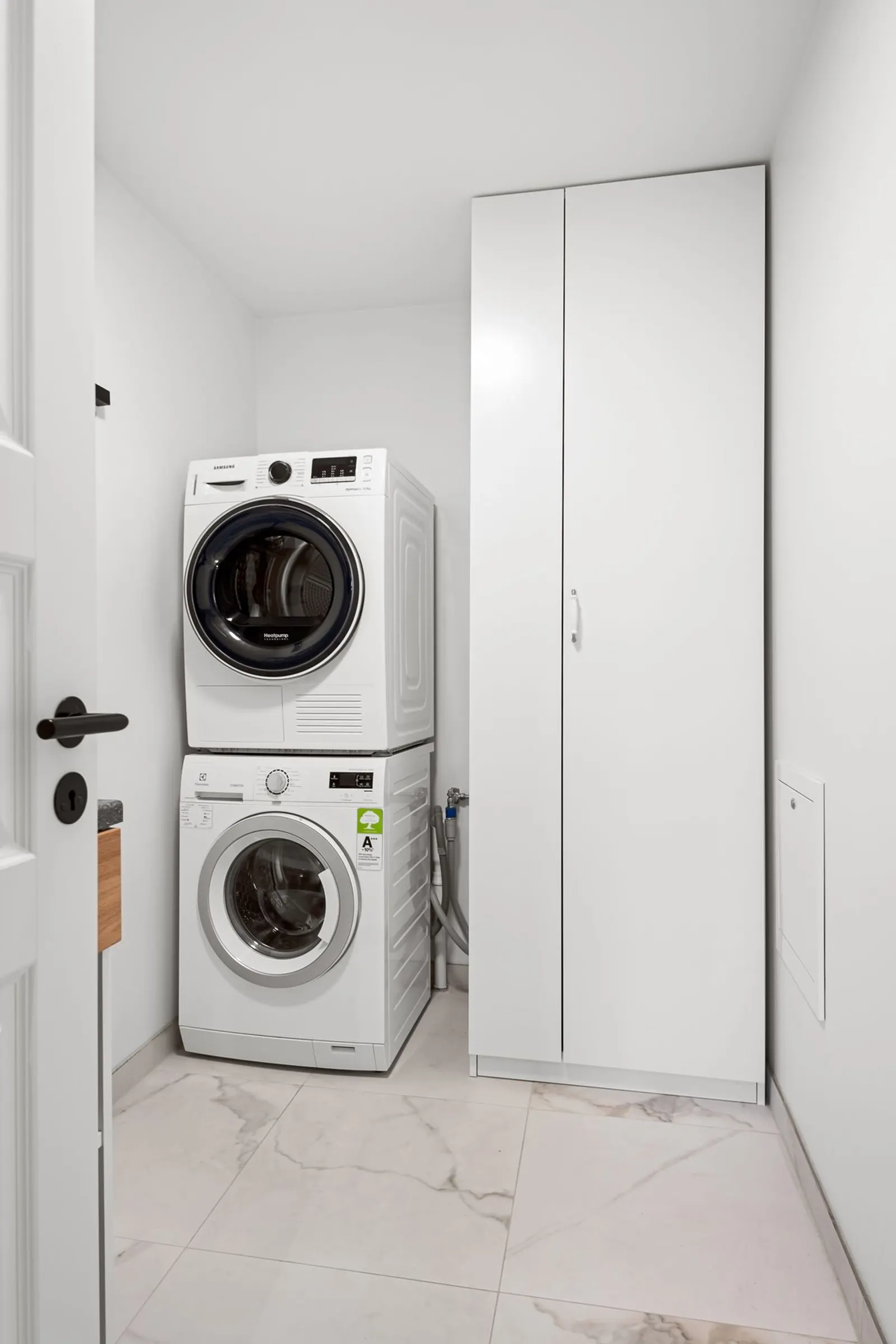
Whether a washer won't take on water, takes forever to fill, or ends its cycle with water still pooled in the drum, the cause is almost always the inlet valve or the drain pump. Cully's genuine variety of housing — conventional homes, properties on larger lots with their own utility buildings, and a real number of manufactured homes — means the plumbing feeding that washer isn't standardized the way it might be in a more uniform neighborhood, so we confirm the actual hookup before diagnosing the part.
Between them, the inlet valve and the drain pump explain nearly every fill or drain complaint a washer can have. The valve tends to fail from mineral scale or a cracked diaphragm; the pump usually goes when its impeller wears thin or something like a coin or small sock works its way inside and jams it. What sets Cully apart is how much the plumbing itself can vary from property to property — a manufactured home's supply and drain setup doesn't always match a conventional house, and a standalone utility building on a larger lot may have its own separate connections entirely. We map out what's actually there before deciding which part is at fault.
Diagnosing fill and drain issues separately.
Testing the valve for mineral buildup or a torn internal diaphragm.
Checking for a worn impeller or an object lodged in the pump.
Confirming supply setup, which can differ in manufactured homes.
Confirming the standpipe height and diameter match the washer's drain rate.
Once an inlet valve or drain connection starts leaking, it rarely stays a minor drip for long — the water has to go somewhere, and it usually finds the least convenient place to pool. That matters just as much whether the washer sits in a conventional house, a manufactured-home utility closet, or a standalone building on one of Cully's larger lots; in every case, catching it early keeps a small fix small.
Straight answers — no clicking around.
Call Portland Washer Repair to schedule a same-day or next-day valve/pump diagnostic visit.
(888) 555-0123