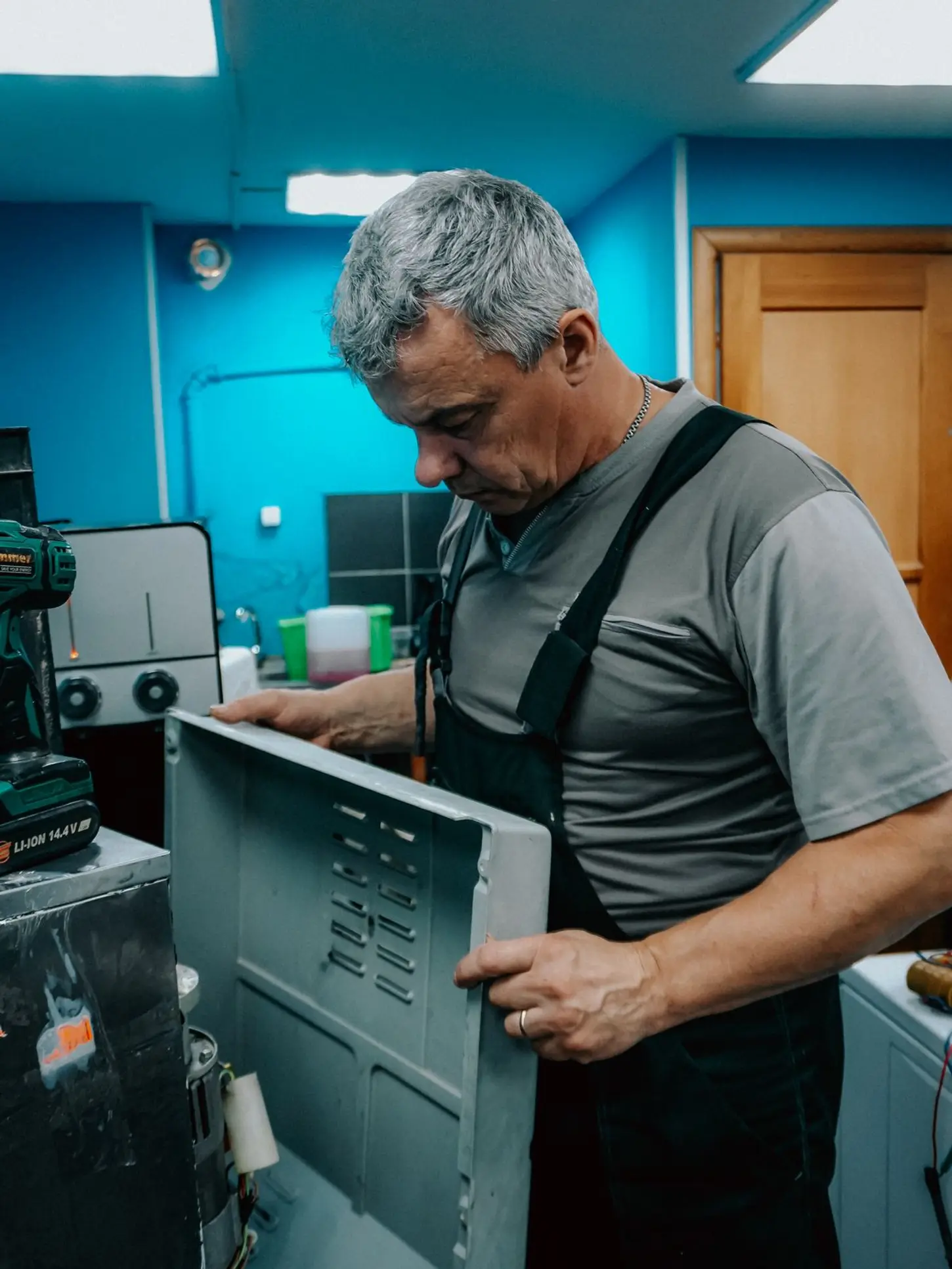
A grinding or rumbling noise during spin points to a worn drum bearing, and in Mount Tabor's basement laundry rooms — often set on an older concrete pad below street level — we also check whether the floor itself is contributing to the wear pattern before recommending a repair.
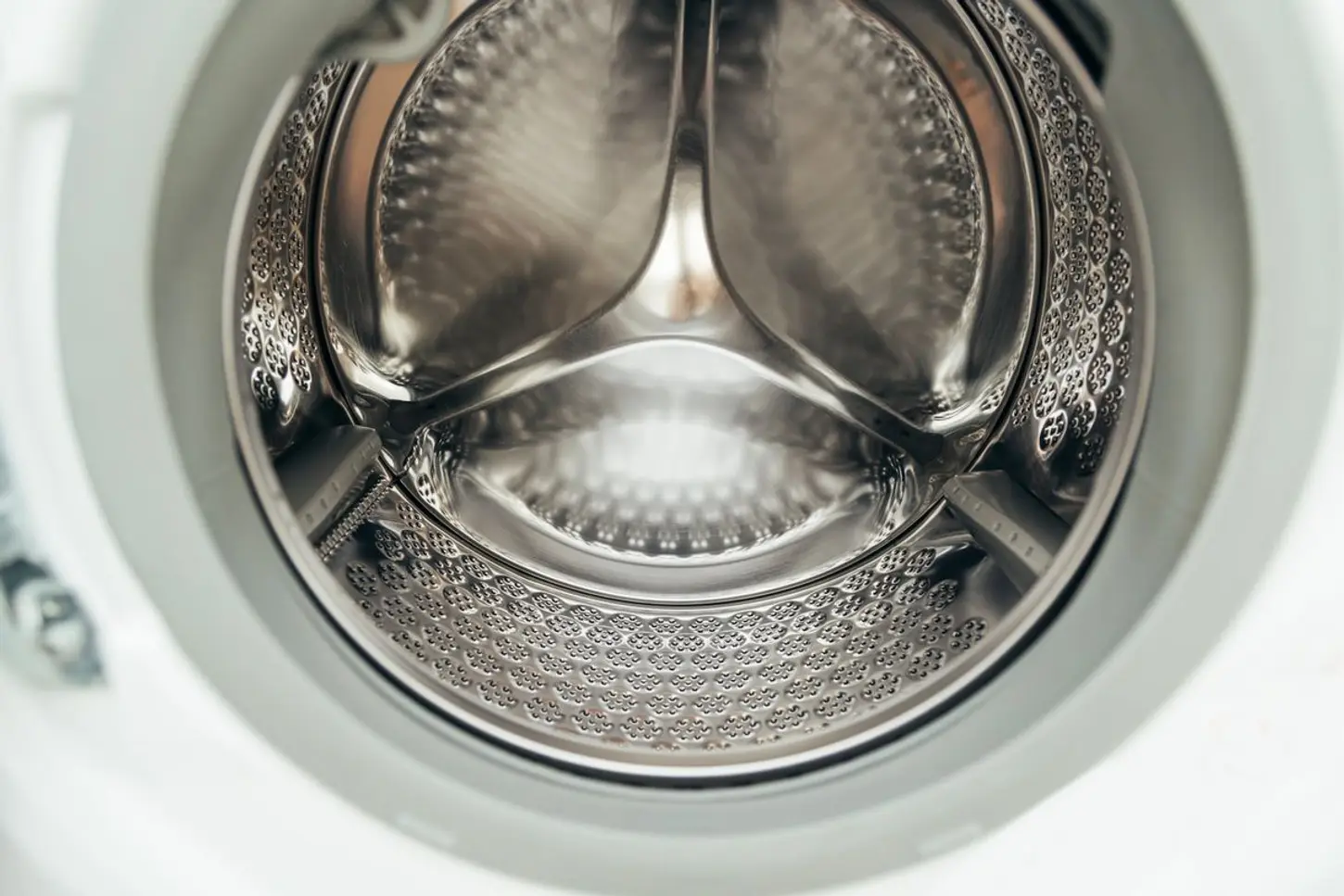
Basement laundry rooms are the standard setup in Mount Tabor's hillside Craftsman and bungalow homes, and older basement concrete pads can settle unevenly over decades, especially in a home built directly into sloped terrain. A washer that's slightly out of level puts extra strain on the drum bearing and suspension every time it spins, which is one more thing worth checking alongside the usual signs of bearing wear.
We spin the drum by hand, check for a bearing-seal leak, and confirm the machine's level on the basement floor before recommending anything — carrying that diagnostic down the stairs is part of the job in this neighborhood.
Spinning the drum by hand to check for grinding or looseness.
Checking for a bearing seal leak on the basement floor.
Checking level on basement concrete that may have settled with age.
Ruling out a bad shock or spring before confirming the bearing.
A basement floor poured decades ago, in a home built into Mount Tabor's hillside terrain, can settle unevenly over time in ways a newer slab wouldn't. If a washer sits slightly tilted as a result, the drum bearing and suspension work harder to keep the drum centered every cycle — accelerating wear that would otherwise take longer to show up. We check for this specifically in basement installs.

Call Portland Washer Repair to schedule a same-day or next-day drum bearing diagnostic visit.
(888) 555-0123