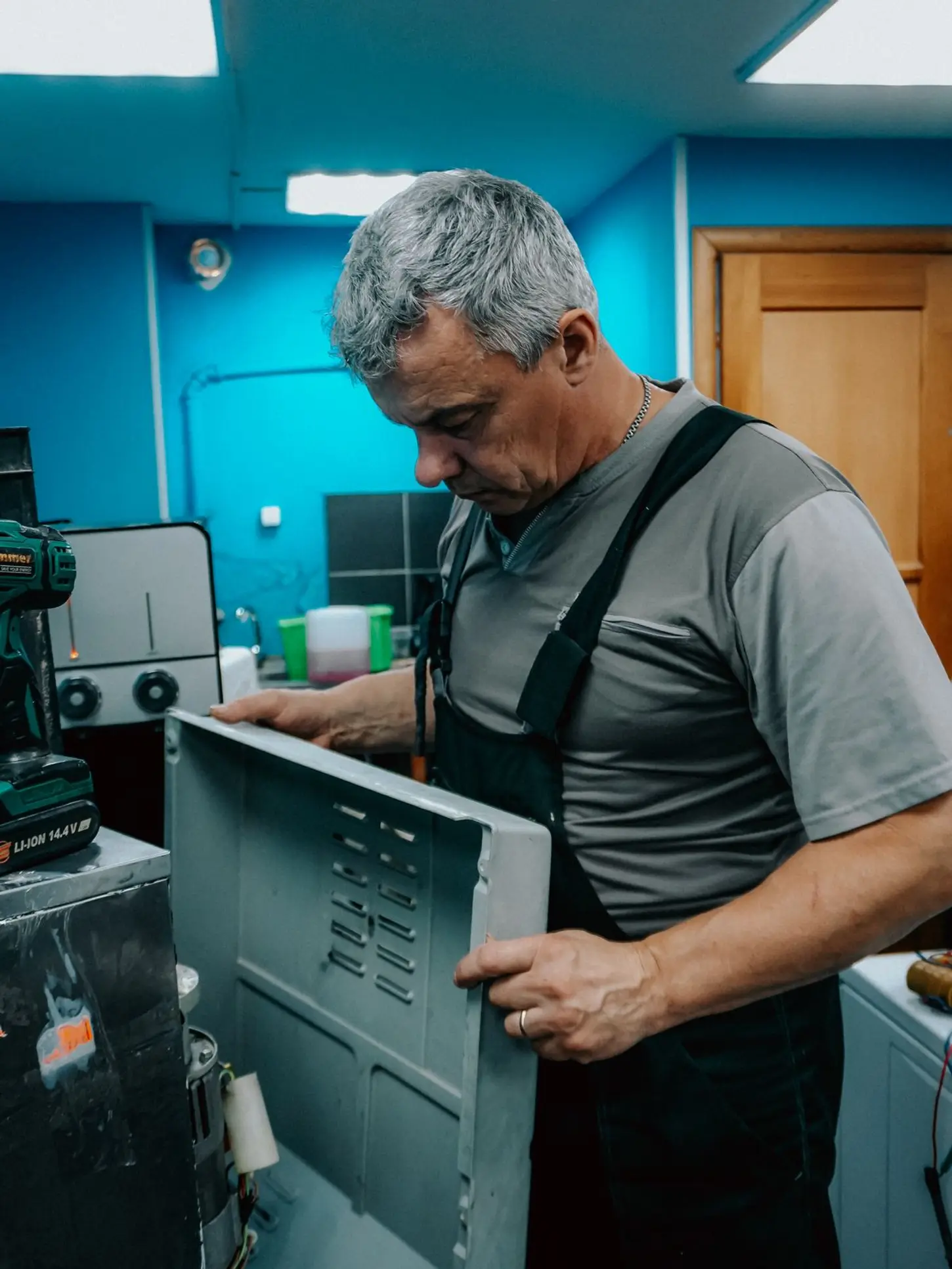
A washer that grinds or rumbles louder as the spin cycle ramps up is telling you the drum bearing has worn out. The good news for Kenton homeowners: because these bungalow-era houses tend to keep the washer in a compact utility nook or an attached garage rather than a hard-to-reach basement, once we've confirmed the bearing is actually the problem, the repair itself is usually one of the more straightforward ones we do.
Before condemning a bearing, we check the usual suspects that can sound similar — a belt starting to slip, worn shocks, or a load that's sitting unevenly in the drum. Kenton's practical, no-frills bungalow layouts work in our favor once we've confirmed it really is the bearing: a compact utility nook or single-car garage generally gives enough room to pull the washer forward and get at the rear panel without the awkward maneuvering a cramped basement corner sometimes requires elsewhere in Portland.
The same diagnostic path, every visit.
Spinning the drum by hand to check for grinding, resistance, or looseness.
Checking for a bearing-related seal leak that accelerates bearing wear.
Checking for a drum that moves excessively — a sign of bearing or suspension failure.
Ruling out a bad shock, spring, or unbalanced load before confirming the bearing.
Bearing repair is generally worth doing on a machine that's otherwise running well. On an older washer nearing the end of its typical lifespan, we'll give you the honest cost comparison against replacement so you can decide.
Straight answers — no clicking around.
Call Portland Washer Repair to schedule a same-day or next-day drum bearing diagnostic visit.
(888) 555-0123