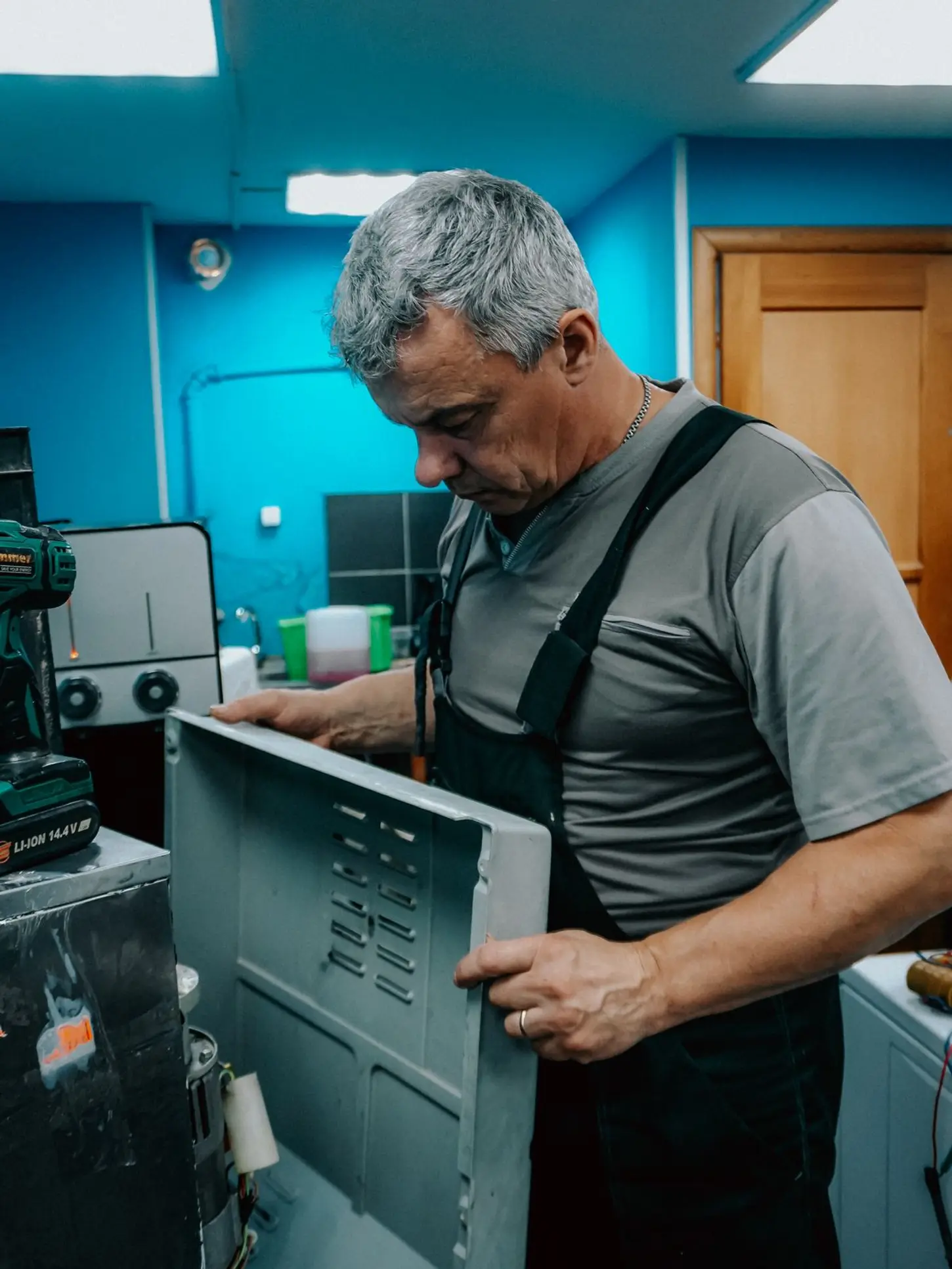
A worn drum bearing usually makes itself known through a grinding or rumbling sound that builds as the spin cycle speeds up. Cully's larger lots change where that noise is actually coming from on a practical level — plenty of washers here live in a detached garage or a separate utility building rather than inside the house — and we ask about that setup when scheduling so we arrive ready for it, before we even confirm the bearing is the actual cause.
Before we condemn a bearing, we check the other parts capable of making a similar noise — a slipping belt, worn shock absorbers, or simply a load that's bunched up on one side of the drum. Cully's housing genuinely runs the gamut: conventional single-family homes on generous lots, standalone utility buildings serving those properties, and a real number of manufactured and mobile homes throughout the neighborhood. We've worked on washers in every one of these settings, and once the bearing's confirmed as the cause, we lay out the repair honestly before any parts get ordered.
The same diagnostic path, every visit.
Spinning the drum by hand to check for grinding, resistance, or looseness.
Checking for a bearing-related seal leak that accelerates bearing wear.
Checking for a drum that moves excessively — a sign of bearing or suspension failure.
Ruling out a bad shock, spring, or unbalanced load before confirming the bearing.
Bearing repair is generally worth doing on a machine that's otherwise running well. On an older washer nearing the end of its typical lifespan, we'll give you the honest cost comparison against replacement so you can decide.
Straight answers — no clicking around.
Call Portland Washer Repair to schedule a same-day or next-day drum bearing diagnostic visit.
(888) 555-0123